
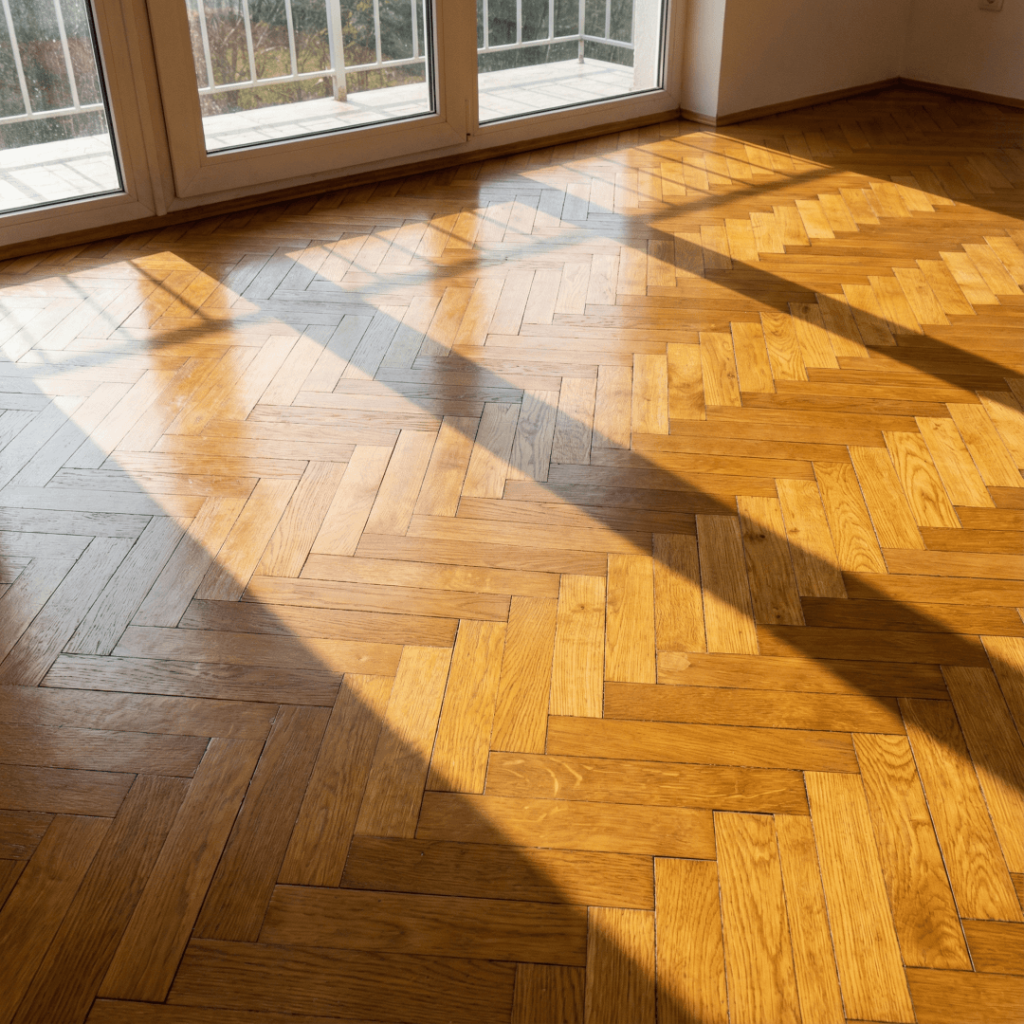
Introduction: The Timeless Charm of Parquet
There is a reason why parquet flooring remains a favorite in Singapore’s bedrooms and living halls. The intricate geometric patterns and the warmth of real timber create a cozy, luxurious atmosphere that cold tiles simply cannot match.
But real wood comes with a trade-off: It is sensitive.
Over time, furniture legs, pet claws, and UV sunlight wear down the protective lacquer. The result? A floor that looks dull, scratched, or discolored. In this guide, we explore how to care for your parquet and the only way to truly restore its original glory.
1. The Singapore Enemy: Humidity & Water
Wood is a living material—it “breathes.” In Singapore’s humid climate, parquet blocks expand and contract.
The biggest mistake homeowners make is using a soaking wet mop.
- The Risk: Excess water seeps into the gaps between the wood blocks. This causes the wood to swell, turn black (rot), or pop up from the subfloor.
- The Rule: Always use a “damp-dry” mop. If the floor takes more than 1 minute to dry, you used too much water.
2. Cleaning vs. Sanding: What Does Your Floor Need?
This is the most common question we get: “Can you just polish my scratches away?”
It is important to understand the two different types of services for wood floors:
A. Deep Cleaning & Buffing (Maintenance)
- Best For: Floors that are dirty or have lost their shine but do not have deep scratches.
- The Process: We use a rotary machine with a specialized wood cleaning solution to lift dirt. We can then apply a “refresh” coating to restore a temporary shine.
- Limitation: This cannot remove scratches that have penetrated the varnish.
B. Sanding & Varnishing (Restoration)
- Best For: Floors with visible scratches, dents, sun discoloration, or worn-out patches.
- The Process:
- Sanding: We use a drum sander to physically remove the old layer of varnish and a thin layer of the damaged wood. This reveals fresh, raw timber underneath.
- Sealing: We apply a primer to protect the wood.
- Varnishing: We apply 2–3 coats of heavy-duty polyurethane finish (Matte, Satin, or Gloss).
- The Result: A floor that looks literally brand new.
3. Dust-Free Sanding: Is it Possible?
Many homeowners avoid sanding because they fear the “dust storm” that coats their furniture.
At [Your Company Name], we utilize modern Dust-Extraction Systems. Our sanding machines are connected to industrial vacuums that capture 95-98% of the sawdust instantly. While no process is 100% dust-free, modern technology means you don’t have to cover your entire house in plastic sheets anymore.
4. Protecting Your Investment (DIY Tips)
Once your floor is restored, keep it looking great with these habits:
- Furniture Protection: Stick felt pads under every chair leg. One dragged chair can ruin a freshly varnished floor in seconds.
- No High Heels: Stiletto heels exert massive pressure per square inch and will dent even hard timber like teak or oak.
- UV Protection: If you have direct afternoon sun hitting the floor, use curtains. UV rays can bleach the wood color over time.
- The “Damp” Mop Only: We repeat this because it’s vital—keep the water to a minimum!
Conclusion: Don’t Cover It—Restore It.
If your parquet looks old, don’t rush to cover it with vinyl or carpet. You are sitting on a valuable natural material that can be renewed. Whether you need a simple deep clean or a full grind-and-varnish restoration, we have the tools to make your wood grain pop again.Ready to see your wood floors shine? Get a Quote for Parquet Sanding & Varnishing Today.