
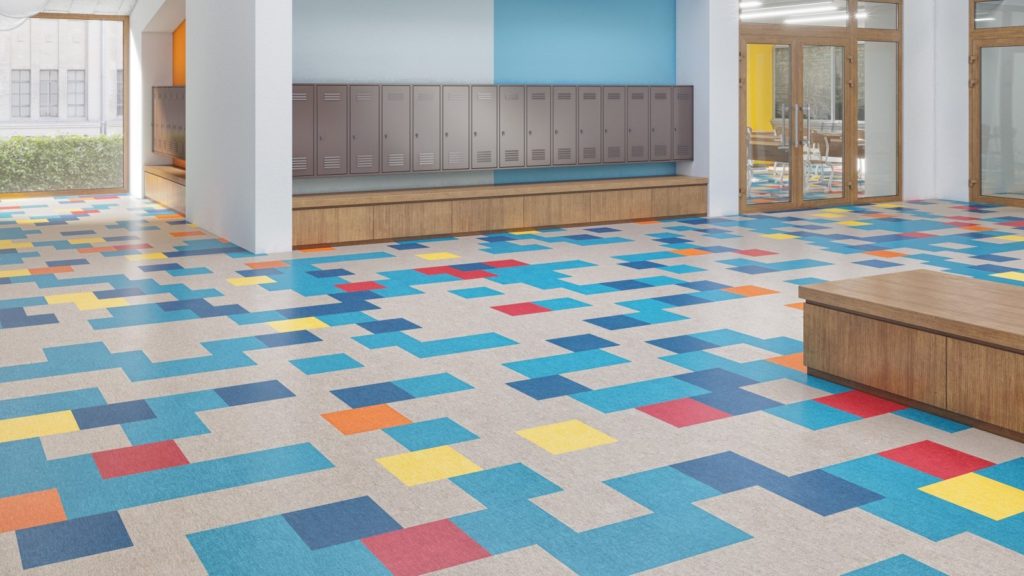
Walk into an older HDB corridor, a neighbourhood clinic, a school hall, or even a light-industrial workspace in Singapore, and chances are you are stepping on a floor that has silently endured decades of foot traffic. Vinyl Composition Tiles, more commonly known as VCT, may not always steal the spotlight in glossy interior magazines, but their presence is deeply woven into the built environment of the city. They are practical, resilient, and surprisingly versatile qualities that align closely with Singapore’s approach to urban living and infrastructure.
Unlike trend-driven flooring options that come and go, VCT has maintained its relevance by adapting quietly. It is a material that prioritises function without completely sacrificing form, making it a familiar choice in commercial, institutional, and public spaces across the island.
Understanding the Material Beneath Your Feet
Vinyl Composition Tiles are manufactured from a blend of natural limestone fillers, thermoplastic binders, and vinyl resins. This composition gives VCT its signature hardness and stability, allowing it to withstand consistent pressure, rolling loads, and heavy foot traffic. Once installed and properly finished, the surface forms a dense, seamless plane that resists wear better than many softer vinyl alternatives.
In Singapore’s built environment, where space is intensively used and maintenance efficiency matters, this structural reliability becomes a key reason for VCT’s continued popularity. Floors in schools, healthcare facilities, and transport-adjacent buildings cannot afford frequent downtime for replacement or repair. VCT offers longevity that aligns with these operational realities.
A Flooring Choice Shaped by Climate and Urban Density
Singapore’s tropical climate presents unique challenges for interior finishes. High humidity, sudden temperature changes, and frequent cleaning can take a toll on flooring materials. VCT performs well under these conditions when properly sealed and maintained. Its dense composition helps reduce moisture absorption, and the surface finish provides a protective layer against staining and water ingress.
In high-density environments such as office buildings, shopping complexes, and institutional facilities, flooring must also cope with constant movement and cleaning cycles. VCT’s ability to maintain its integrity despite daily mopping and polishing makes it a pragmatic choice for spaces that operate almost continuously.
The Evolution of Aesthetic Possibilities
Historically, VCT was associated with utilitarian design muted colours, repetitive patterns, and purely functional layouts. However, modern manufacturing techniques have expanded the visual potential of VCT significantly. Today, tiles are available in a wide spectrum of colours, from understated neutrals to bold, saturated tones that can be arranged into custom patterns.
In Singapore, where interior spaces often balance efficiency with subtle visual identity, VCT is increasingly used to define zones within large areas. Schools may use colour blocks to guide movement, clinics might create calming visual rhythms, and offices can subtly distinguish collaborative zones from quieter workspaces all without introducing multiple flooring types.
Installation Practices in the Local Context
Installing VCT requires precision, particularly in ensuring a smooth and level subfloor. In Singapore, where concrete slabs are the standard base for most buildings, proper surface preparation is critical. Any imperfection beneath the tiles can eventually telegraph through the surface, affecting both appearance and durability.
Professional installers typically follow strict acclimatisation and adhesive guidelines to account for indoor temperature and humidity conditions. Once laid, the tiles are often sealed and polished to create a uniform finish that enhances durability and ease of cleaning. This post-installation finishing step is especially important in high-use environments common in the city.
Maintenance as a Long-Term Investment
One of the defining characteristics of VCT is that its lifespan is closely tied to maintenance practices. Unlike some flooring materials that are largely maintenance-free but difficult to repair, VCT rewards consistent care. Regular cleaning, periodic polishing, and occasional stripping and re-sealing help preserve both appearance and performance.
In Singapore, many facilities already operate under structured maintenance schedules, making VCT a compatible choice. Schools, government buildings, and commercial facilities often have in-house or contracted cleaning teams trained to manage VCT surfaces efficiently. Over time, this predictable maintenance routine can prove more cost-effective than replacing damaged or worn flooring.
Cost Efficiency in a High-Cost City
Space and construction costs in Singapore are among the highest in the region. Flooring decisions therefore tend to focus on long-term value rather than short-term trends. VCT stands out in this regard by offering a relatively low initial material cost combined with an extended service life.
While it does require ongoing maintenance, the cumulative cost over decades can remain competitive, especially in large floor areas. This balance of affordability and durability explains why VCT continues to be specified in large-scale projects where budget control and performance certainty are essential.
Sustainability and Responsible Use
As sustainability becomes a growing consideration in Singapore’s construction and renovation sectors, VCT occupies a nuanced position. The tiles themselves are not biodegradable, but their long lifespan reduces the frequency of replacement, which can offset environmental impact over time.
Some VCT products are designed to meet green building standards, particularly when used in conjunction with low-VOC adhesives and finishes. In renovation projects, existing VCT floors can sometimes be restored rather than removed, minimising waste and disruption. This approach aligns with Singapore’s broader push toward resource efficiency and sustainable building practices.
Common Applications Across the Island
VCT is widely used in educational institutions, healthcare facilities, public buildings, and older commercial spaces throughout Singapore. These environments share common requirements: durability, ease of cleaning, and predictable performance. In industrial and back-of-house areas, VCT provides a hard-wearing surface that supports equipment movement without significant damage.
Even as newer flooring materials enter the market, VCT remains a trusted solution in situations where reliability outweighs decorative appeal. Its continued presence in both older buildings and renovated spaces speaks to its adaptability rather than obsolescence.
Comparing VCT with Modern Vinyl Alternatives
Luxury vinyl tiles and sheets have gained popularity in recent years, offering softer textures and more realistic wood or stone visuals. However, VCT differs fundamentally in philosophy. It prioritises structural strength and long-term wear over immediate aesthetic impact.
In Singapore’s context, this distinction matters. Areas that experience constant foot traffic or require frequent cleaning may benefit more from VCT’s resilience than from visually elaborate alternatives that may degrade faster under similar conditions. The choice often comes down to function, budget, and expected lifespan rather than appearance alone.
A Material That Reflects Practical Design Thinking
Vinyl Composition Tiles may not always be noticed, but their contribution to Singapore’s interior spaces is significant. They support daily routines in schools, offices, clinics, and public buildings without demanding attention. This quiet reliability mirrors the city’s broader design philosophy efficient, durable, and purpose-driven.
As design trends evolve and sustainability considerations grow, VCT continues to hold its ground by doing what it does best. It provides a dependable foundation for spaces that prioritise function, longevity, and responsible use of resources. In a city where every square metre matters, that kind of reliability is far from ordinary.